


Похожие товары
-

ALSS — Машина для производства медицинского нетканого материала из полипропилена методом спанбонда, толщина 3200 мм
-
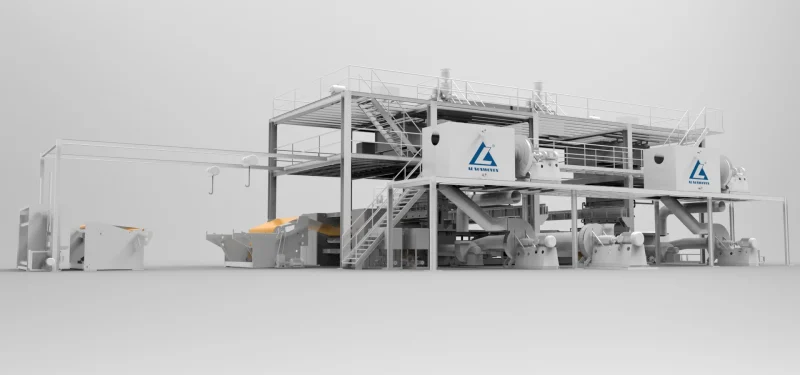
AL-4200 мм SS PP спанбонд нетканый материал изготовление машины
-

ALSS-2400 мм SS балка PP спан-бонд нетканый здоровье нетканый ткань делая производственную машину
-
AL-3200 мм SS PP спанбонд нетканый материал изготовление машины
-

ALSS-1600 мм SS балка PP спан-бонд нетканый здоровье нетканый ткань делая производственную машину
Машины для производства полипропиленового спанбонда SS-типа
Aolong Nonwoven, надежный поставщик машин для производства нетканого полотна, предлагает машину для производства нетканого материала методом спанбонда типа SS PP, разработанную для изготовления прочных и надежных нетканых материалов с двумя слоями спанбонда. Данная машина идеально подходит для производителей, ищущих экономически эффективные решения для таких областей применения, как сельское хозяйство, фильтрация и медицинские изделия. Передовые технологии, заложенные в ее конструкцию, обеспечивают высокую производительность и качество ткани, помогая предприятиям удовлетворять разнообразные потребности отрасли.
Представлено 8 товаров
-

Линия по производству нетканого материала типа «спаундбонд» модели PP компании AOLONG SS
-
A.L -SS 1600mm нетканая машина детские пеленки ткань Pp спанбонд нетканый делая машину
-
AL-3200 мм SS PP спанбонд нетканый материал изготовление машины
-
AL-4200 мм SS PP спанбонд нетканый материал изготовление машины
-
ALSS-1600 мм SS балка PP спан-бонд нетканый здоровье нетканый ткань делая производственную машину
-
ALSS-2400 мм SS балка PP спан-бонд нетканый здоровье нетканый ткань делая производственную машину
-
ALSS — Машина для производства медицинского нетканого материала из полипропилена методом спанбонда, толщина 3200 мм
-

AL-1600mm SS балка PP Spunbons нетканые ткани нетканые машины делая линию продукта
SS-Type PP Spunbond Nonwoven Machine
Two-Layer Spunbond Production for Stronger, More Uniform and Versatile PP Nonwoven Fabrics
SS-Type PP spunbond nonwoven machines use two spunbond layers to produce polypropylene nonwoven fabrics with a more controlled multi-layer structure. Compared with a single-beam S-Type line, the two-layer configuration provides greater flexibility in fabric formation and can help manufacturers balance strength, softness, coverage and uniformity according to the target product.
An SS line is a practical choice when a single spunbond layer is not sufficient for the required fabric structure, but a three-layer or meltblown composite configuration is not necessary. The machine therefore sits between straightforward single-layer production and more complex SSS, SMS and SSMMS systems.
Для производителей, сравнивающих различные Оборудование для производства нетканого материала методом спанбонда из полипропилена, the right configuration should be determined by the required fabric structure, GSM, working width, production output and final application.
What Is an SS-Type PP Spunbond Machine?
Сайт SS in an SS-Type machine refers to a two-layer spunbond structure.
The production line forms two spunbond layers through two spinning systems before the web is bonded into the finished nonwoven fabric. The two-layer arrangement provides greater control over the fabric structure than a single-layer S configuration.
This does not simply mean that an SS machine produces “stronger fabric” in every situation. Its main advantage is the additional flexibility provided by the two-layer production structure.
By controlling the formation and distribution of the two spunbond layers, manufacturers can develop fabrics with the required balance of tensile strength, softness, coverage and uniformity.
Why Choose a Two-Layer Spunbond Configuration?
Two Spunbond Layers for Greater Fabric Control
An S-Type line produces a single spunbond layer. An SS line introduces a second spunbond layer, giving manufacturers more flexibility when designing the final fabric structure.
The two layers can be considered as an integrated fabric system rather than simply two separate layers. Their combined formation influences the finished fabric’s uniformity, strength and surface characteristics.
Better Balance Between Strength and Softness
The SS structure can provide a useful balance between mechanical performance and fabric feel.
For products where a single layer may not provide sufficient structure, the second spunbond layer creates additional flexibility in achieving the required fabric properties without moving directly to a three-layer or meltblown composite line.
More Flexible Fabric Production
An SS configuration can support a broader range of product requirements than a simple single-beam line.
This makes it relevant to manufacturers producing different PP spunbond fabric specifications for hygiene, packaging, agricultural and general industrial applications.
Suitable for Continuous High-Volume Production
The two-layer production structure is integrated into a continuous extrusion, spinning, web-forming and thermal-bonding process.
The actual output depends on working width, GSM, machine configuration, raw material, production speed and operating conditions. Therefore, production capacity should always be evaluated against the target fabric specification rather than maximum machine speed alone.
What Can an SS-Type Machine Produce?
SS-Type machines are designed for two-layer PP spunbond nonwoven fabrics.
The configuration can be considered for products where fabric uniformity, tensile performance, coverage and production efficiency need to be balanced within a two-layer spunbond structure.
Typical applications include:
- Hygiene and disposable products
- Упаковочные материалы
- Agricultural nonwovens
- Household products
- Защитные чехлы
- General industrial nonwovens
S vs. SS vs. SSS: How Does the Structure Change?
The most useful way to understand the spunbond machine range is to look at the number and function of the fabric layers.
| Тип машины | Структура | Main Difference | Typical Selection Logic |
|---|---|---|---|
| S | 1 spunbond layer | Simple single-layer production | When one layer meets the product requirements |
| SS | 2 spunbond layers | Более тщательный контроль над структурой ткани | When additional spunbond structure is required |
| SSS | 3 spunbond layers | More layer-forming flexibility | When a three-layer spunbond structure is required |
| SMS | Спанбонд + Мелтблаун + Спанбонд | Adds a meltblown functional layer | Когда требуется обеспечить эффективность фильтрации или барьерных свойств |
| SSMMS | Спанбонд + мелтблаун + мелтблаун + спанбонд + спанбонд | Пятислойная композитная конструкция | Когда требуется более сложная функциональная конструкция ткани |
The key difference between S and SS is therefore not simply machine size or production capacity.
It is the fabric structure.
An S-Type line focuses on single-layer spunbond production, while an SS line gives manufacturers another spunbond layer to work with. The decision should be based on whether that additional layer contributes meaningful value to the finished product.
SS-Type PP Spunbond Production Process
An SS production line combines two spunbond forming systems within one continuous manufacturing process.
Подача полипропиленовой смолы
↓
Экструзия и плавление
↓
Фильтрация расплава и дозирование
↓
Формирование первого слоя из спанбонда
↓
Формирование второго слоя из спанбонда
↓
Охлаждение и волочение
↓
Формирование сети
↓
Термическая склеивка и каландрирование
↓
Намотка и продольная резка
The two spunbond layers are formed within the production line before entering the bonding stage. Their combined web structure can be adjusted according to the target fabric specification.
The extrusion and spinning systems need to operate consistently so that the two layers remain stable across the working width. Web formation and thermal bonding then determine how effectively the layers are consolidated into the finished fabric.
Two-Layer Fabric Formation
The main technical difference between S and SS production occurs during fabric formation.
An S-Type line forms one spunbond layer before thermal bonding. An SS line forms two spunbond layers, allowing the production process to distribute the required fiber structure across two spunbond systems.
This additional layer can be useful when the target product requires more controlled fabric formation or a different balance between mechanical performance and fabric feel.
The actual result depends on the machine configuration, process parameters, PP raw material and target GSM.
For this reason, SS machine selection should begin with the finished fabric specification rather than simply selecting a wider machine or higher rated output.
SS-Type Machine Configuration
An SS production line integrates two spunbond systems with the supporting equipment required for continuous PP nonwoven production.
The main configuration includes material feeding, extrusion, filtration, metering, spinning, cooling, drawing, web formation, thermal bonding and winding.
The final configuration should be determined according to:
- Рабочая ширина
- Целевая сеть GSM
- Требуемый объем производства
- Технические характеристики полипропиленовой смолы
- Final fabric properties
- Заводское напряжение
- Свободные площади для мастерских
- Требования к автоматизации
- Downstream converting requirements
For a new production project, these parameters should be confirmed before the machine configuration and quotation are finalized.
SS-Type Machine Specifications
SS-Type production lines can be configured for different fabric widths, GSM ranges and output requirements. The right configuration depends on how these factors work together.
For example, a wider working width can increase production capacity, while heavier fabrics generally require a different production speed and material throughput. The target output should therefore be considered together with the required fabric specification rather than viewed as a standalone machine rating.
When selecting an SS-Type line, manufacturers should define:
- Ширина ткани: Required finished fabric width and usable working width
- GSM: Target fabric weight or production range
- Output: Required production capacity based on actual fabric specifications
- Сырье: PP resin grade and material requirements
- Условия на заводе: Available power supply, workshop space and supporting utilities
The final machine configuration can then be matched to the intended product, production volume and operating environment. Actual output and energy consumption may vary according to fabric GSM, raw material, production speed and operating conditions.
Applications of SS-Type PP Spunbond Fabric
The two-layer structure makes SS machines suitable for applications where the finished fabric needs more controlled structure than a basic single-layer spunbond fabric.
Гигиенические товары
SS fabric can be considered for hygiene products where fabric uniformity, softness and mechanical performance need to be balanced.
Упаковка
The combination of fabric structure and tensile performance can support reusable bags, packaging materials and other products requiring durable PP nonwoven fabric.
Нетканые материалы для сельского хозяйства
Agricultural applications may require consistent coverage, adequate strength and controlled fabric weight. An SS structure can provide additional flexibility when developing these specifications.
Household and General-Purpose Products
SS spunbond fabric can also be used in household and general-purpose products where stable quality and production efficiency are important.
Промышленные материалы
For industrial applications requiring more structured PP nonwoven fabric, the two-layer configuration can provide an alternative to both single-layer and more complex multi-layer systems.
The final application should always be evaluated against actual fabric requirements rather than selected solely by market category.
When Is an SS-Type Machine the Right Choice?
An SS-Type PP spunbond production line is most appropriate when a manufacturer needs more fabric structure and production flexibility than an S-Type line provides, but does not require a three-spunbond or spunbond-meltblown configuration.
An SS line may be suitable when:
- One spunbond layer does not provide the desired fabric structure
- The product requires greater control over fabric uniformity
- A balance between strength and softness is important
- The target product is based on two spunbond layers
- Meltblown filtration or barrier layers are not required
- The manufacturer needs a dedicated two-layer PP spunbond production line
This positioning is important because SS should not simply be marketed as “better than S”.
It is different in structure, and the additional layer only creates value when the finished product benefits from it.
SS vs. SMS vs. SSMMS: Which Configuration Do You Need?
The main difference between these configurations is the number and type of spunbond and meltblown layers. The appropriate production line depends on the required fabric structure and functional performance.
| Настройка | Структура слоев | Основная характеристика | Suitable When |
|---|---|---|---|
| SS | Спанбонд + Спанбонд | Two-layer spunbond structure with good fabric uniformity and mechanical performance | The product requires a two-layer spunbond structure without a meltblown layer |
| SMS | Спанбонд + Мелтблаун + Спанбонд | Combines spunbond strength with a fine-fiber meltblown layer | The fabric requires filtration or barrier performance |
| SSMMS | Спанбонд + мелтблаун + мелтблаун + спанбонд + спанбонд | Multi-layer composite structure with greater functional layer flexibility | The product requires a more complex combination of strength, filtration and barrier properties |
- Для two-layer spunbond production, see Нетканые машины SS.
- For fabrics requiring a meltblown layer, see the Машина для производства нетканого материала SMS range.
- For more complex five-layer composite production, see Машины для производства нетканых материалов SSMMS.
SS-Type PP Spunbond Machine Product Range
The SS-Type PP spunbond machine range is available in different working widths to meet varying fabric specifications and production requirements. Machine configuration can be selected according to target fabric GSM, required output, factory conditions and final application.
Available working widths include:
| Рабочая ширина | Настройка | Production Focus |
|---|---|---|
| 1600 мм | SS-Type | Compact two-layer spunbond production |
| 2400 мм | SS-Type | Medium-width fabric production |
| 3200 мм | SS-Type | Higher-volume production |
| 4200 мм | SS-Type | Wide-width spunbond production |
The actual production capacity, fabric GSM range, power consumption and auxiliary equipment configuration depend on the selected model and operating conditions. For a project-specific recommendation, provide your target fabric width, GSM and required output so the production line can be configured accordingly.
Project Requirements for an SS-Type Production Line
Before selecting an SS machine, manufacturers should define the target production requirements.
Целевой продукт: What type of PP spunbond fabric will be produced?
Ширина ткани: What finished width is required?
GSM: What fabric weight range is needed?
Требуемый результат: What daily, monthly or annual production target must the line achieve?
Окончательная заявка: What properties are required by the downstream product?
Factory Voltage: What electrical standard is available at the production site?
Destination Country: What installation and electrical requirements apply?
New Project or Line Upgrade: Is this a new factory or an expansion of existing production capacity?
Expected Purchase Date: When is the production line expected to enter manufacturing?
Providing this information allows the machine configuration to be developed around the actual production objective.
SS-Type PP Spunbond Machine FAQ
What does SS mean in a spunbond machine?
SS refers to a two-layer spunbond structure. The production line forms two spunbond layers before thermal bonding.
В чём заключается разница между машинами для производства спанбонда типов S и SS?
An S-Type machine produces one spunbond layer, while an SS-Type machine produces two spunbond layers. SS provides additional flexibility when the target fabric requires a two-layer structure.
Is SS stronger than S?
An SS structure can provide greater fabric structure and mechanical performance potential, but the final fabric properties depend on GSM, raw material, process parameters and machine configuration. SS should not be selected solely because it has two layers.
What fabrics can an SS machine produce?
SS machines can produce two-layer PP spunbond nonwoven fabrics for hygiene, packaging, agricultural, household and industrial applications, depending on the target fabric specification.
Что выбрать: SS или SSS?
Choose SS when a two-layer spunbond structure meets the product requirements. SSS should be considered when the target product requires a three-layer spunbond structure or additional control over layer formation.
What is the difference between SS and SMS?
SS uses two spunbond layers. SMS combines spunbond and meltblown layers. SMS is more appropriate when filtration or barrier performance is part of the finished fabric requirement.
Can an SS machine produce lightweight fabric?
Yes. The suitable GSM range depends on the machine configuration and process conditions. The target GSM should be confirmed during machine selection.