



Produtos Relacionados
-

ALSS-3200mm SS PP Spun-bond Não tecido Saúde Não tecido Máquina de produção de tecido
-
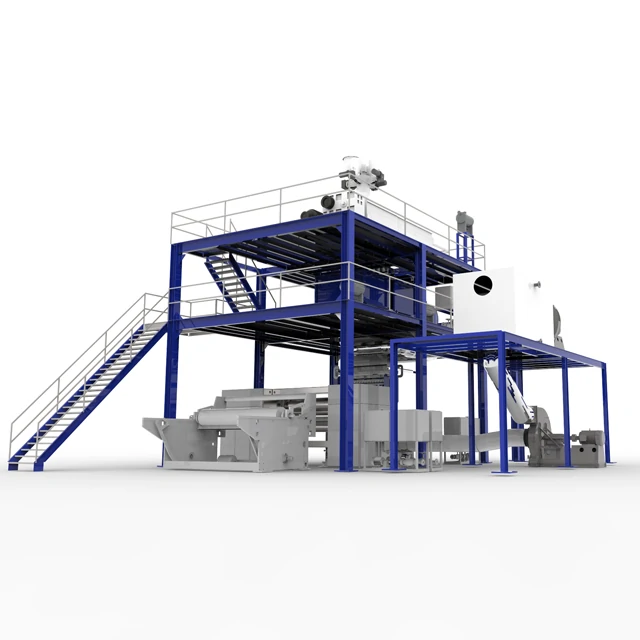
AL- 2400mm S PP Spunbond Tecido Não Tecido Máquina de fazer
-

Linha de produção de tecido não tecido PP Spunbond AL-3200mm S Beam
-

AL-SSMS 1600mm PP Spunbond Tecido Não Tecido Máquinas para fabrico de máquinas para medicina, saúde, sacos, máquina para fabrico de batas cirúrgicas
-
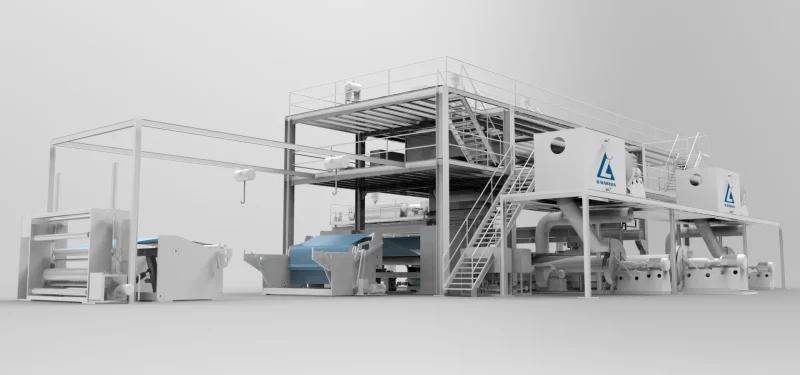
ALSMS-2400mm PP Spun-bond não tecido médico não tecido que faz a linha de produção de tecido
Máquinas de não-tecidos PP Spunbond tipo SSMMS
Como líder fornecedor de máquinas para fabrico de tecidos não tecidos, A Aolong Nonwoven garante que cada máquina SSMMS cumpre rigorosos padrões de qualidade e fiabilidade.
A mostrar todos os 4 resultados
-
AL-SSMS 1600mm PP Spunbond Tecido Não Tecido Máquinas para fabrico de máquinas para medicina, saúde, sacos, máquina para fabrico de batas cirúrgicas
-

AL-SSMMS 1600mm Máquina de fabricação de tecido não tecido de polipropileno fundido e soprado para uso médico
-

Máquina para fabricar tecido não tecido médico AL-2400mm SSMMS PP Spunbond
-

AL-SSMMS 3200mm PP Spunbond Máquina de fabricação de tecido não tecido para saúde médica
SSMMS PP Spunbond Nonwoven Machine
Five-Layer Spunmelt Production for Flexible Fabric Structure and Functional Performance
When one meltblown layer is not enough for a target fabric specification, an SSMMS production line provides another option.
SSMMS stands for Spunbond-Spunbond-Meltblown-Meltblown-Spunbond, creating a five-layer PP nonwoven structure. Three spunbond layers provide the structural framework, while two meltblown layers form the fine-fiber section in the middle.
The result is not simply a fabric with “more layers.” The additional M layer gives manufacturers more flexibility when balancing fabric strength, filtration, barrier performance, softness, breathability and GSM.
What Is an SSMMS Nonwoven Machine?
An SSMMS nonwoven machine is designed to produce a five-layer spunmelt fabric with the following structure:
S + S + M + M + S
The three S layers are produced through spunbond technology. Continuous filaments form the main structural framework of the fabric, contributing to strength, stability and handling properties.
The two M layers are produced through meltblown technology. High-speed hot air draws the molten polymer into fine fibers, creating a denser fiber network within the fabric.
These layers come together before thermal bonding and calendering.
The important point is that each layer has a different role. The spunbond layers provide structure, while the meltblown layers provide the fine-fiber component needed for filtration- and barrier-oriented fabric designs.
Why Use Two Meltblown Layers?
An SMS structure already includes one meltblown layer:
S + M + S
SSMMS takes this one step further:
S + S + M + M + S
The second meltblown layer gives the manufacturer another variable when developing the fabric.
The two M layers can contribute to the fine-fiber portion of the fabric, while the three S layers help maintain its mechanical structure. Depending on the production parameters and target specification, the relationship between these layers can be adjusted to achieve the desired balance.
This can be useful when a single meltblown layer does not provide enough flexibility for the intended fabric design.
The final performance still depends on fiber diameter, GSM, raw material, layer distribution, extrusion conditions, airflow, bonding and other production parameters. More meltblown material does not automatically mean better fabric.
How the Five Layers Work Together
The five layers are not simply stacked together. Each contributes something different to the finished material.
| Layer | Tecnologia | Função principal |
|---|---|---|
| S1 | Spunbond | Structural support and tensile strength |
| S2 | Spunbond | Additional structural support and fabric stability |
| M1 | Meltblown | Fine-fiber structure and functional performance |
| M2 | Meltblown | Additional fine-fiber structure |
| S3 | Spunbond | Surface structure, strength and handling |
The outer and inner spunbond layers provide the fabric with its structural framework. The two meltblown layers sit within that framework and form the fine-fiber section.
This gives the manufacturer more control over the composition of the finished fabric than a conventional single-layer spunbond structure.
SSMMS vs. SMS
SMS and SSMMS are closely related technologies, but they solve different production requirements.
SMS:
S + M + S
SSMMS:
S + S + M + M + S
The main difference is the additional S and M layers.
| Caraterística | SMS | SSMMS |
|---|---|---|
| Total layers | 3 | 5 |
| Spunbond layers | 2 | 3 |
| Meltblown layers | 1 | 2 |
| Fine-fiber layers | 1 | 2 |
| Structural layers | 2 | 3 |
| Multilayer flexibility | Padrão | Greater |
| Typical selection | General spunmelt fabric requirements | More demanding multilayer specifications |
SMS can be a practical choice when one meltblown layer is sufficient for the target fabric.
SSMMS becomes more relevant when the product requires a more developed five-layer structure and greater control over the relationship between structural and fine-fiber layers.
SSMMS vs. SSS
The difference between SSS and SSMMS is even more straightforward.
SSS:
S + S + S
SSMMS:
S + S + M + M + S
Both structures contain three spunbond layers, but SSS uses spunbond technology throughout the fabric.
SSMMS replaces the central spunbond section with two meltblown layers.
| Requirement | SSS | SSMMS |
|---|---|---|
| Três camadas de spunbond | ✓ | ✓ |
| Meltblown layers | ✓ | |
| Fine-fiber structure | Application dependent | ✓ |
| Strength-oriented structure | ✓ | ✓ |
| Filtration-oriented design | Application dependent | ✓ |
| Barrier-oriented design | Application dependent | ✓ |
| Five-layer S-S-M-M-S structure | ✓ |
If the fabric specification is based entirely on spunbond layers, SSS nonwoven machines may be more appropriate.
If the product requires meltblown layers within the fabric, SSMMS offers a different production route.
SSMMS Nonwoven Production Process
The SSMMS process combines three spunbond forming sections and two meltblown sections within one continuous production line.
PP Resin Feeding
↓
Extrusion & Melting
↓
Melt Filtration & Metering
↓
Spunbond Filament Formation
↓
Cooling & Drawing
↓
Meltblown Fiber Formation 1
↓
Meltblown Fiber Formation 2
↓
S-S-M-M-S Web Formation
↓
Colagem térmica
↓
Calandragem
↓
Enrolamento
↓
Slitting & Rewinding
The spunbond sections produce continuous filaments for the structural layers. The two meltblown systems create fine fibers for the central M layers.
Once the five webs are brought together, thermal bonding consolidates the structure. The fabric is then calendered, wound into rolls and processed further when slitting or rewinding is required.
Because spunbond and meltblown use different fiber-forming conditions, stable temperature, melt flow, airflow and web distribution are important throughout the process.
From PP Resin to Five-Layer Fabric
PP resin enters the extrusion system and is heated until it reaches the required molten state.
After filtration and metering, the polymer is distributed to the spunbond and meltblown sections.
The spunbond systems form continuous filaments. The meltblown systems use high-speed hot air to attenuate the polymer into fine fibers.
The resulting webs are brought together in the S-S-M-M-S arrangement.
At this stage, the fabric is still a loose fiber web. Thermal bonding and calendering give it the required integrity and surface structure before it moves to the winding section.
The finished roll can then be slit or rewound according to the requirements of the downstream process.
What Does SSMMS Fabric Offer?
The value of SSMMS comes from the way its different layers work together.
Structural Strength
The three spunbond layers provide the main structural framework of the fabric and contribute to tensile strength and dimensional stability.
Fine-Fiber Functionality
The two meltblown layers create a much finer fiber network than the spunbond layers.
This structure can support filtration and barrier-oriented fabric designs.
Filtragem
Meltblown technology is widely used where fine fibers are required for particle filtration. Actual filtration efficiency depends on fiber diameter, GSM, web structure, material characteristics and production conditions.
Desempenho da barreira
The multilayer structure can also be developed for applications where resistance to particle or fluid penetration is important.
The final barrier performance depends on the fabric construction and any additional treatment, rather than the SSMMS structure alone.
Respirabilidade
Many protective and hygiene materials need to balance protection with air permeability.
Layer weight, fiber structure and processing conditions all influence this balance.
Fabric Feel
The spunbond outer layers can be configured to influence surface characteristics and handling properties, while the central meltblown layers provide the fine-fiber component.
The finished fabric therefore needs to be evaluated as a whole rather than judging individual layers in isolation.
Where Is SSMMS Fabric Used?
SSMMS is particularly relevant to applications where several fabric properties need to be considered at the same time.
Medical and Protective Materials
Protective products may need a combination of strength, barrier performance, breathability and fabric comfort.
SSMMS provides a five-layer structure that can be developed around these requirements.
Potential applications include:
- Surgical gowns
- Medical drapes
- Protective clothing
- Disposable protective materials
- Selected mask materials
The appropriate fabric specification depends on the finished product and applicable standards.
Produtos de higiene
Hygiene materials often require softness and breathability without sacrificing strength.
SSMMS can be considered for selected hygiene components where a multilayer fine-fiber structure is required.
Potential applications include:
- Baby diaper components
- Adult incontinence products
- Feminine hygiene materials
- Disposable hygiene products
Materiais de filtração
The two meltblown layers make SSMMS relevant to filtration-oriented nonwoven materials.
The machine configuration should be developed according to the required filtration efficiency, air permeability, pressure drop, GSM and other technical targets.
Barrier Materials
For applications where barrier performance is important, the two meltblown layers can form the functional core of the fabric.
The required level of protection should be established before selecting the machine configuration.
Industrial and Technical Nonwovens
SSMMS can also be used for technical nonwoven products where structural support and fine-fiber functionality need to be combined.
The appropriate structure depends on the final application and required performance.
SSMMS Machine Configuration
An SSMMS production line brings together the equipment required to form three spunbond layers and two meltblown layers.
A typical line includes:
- PP feeding system
- Spunbond extruders
- Meltblown extruders
- Melt filtration systems
- Metering systems
- Spinning beams
- Meltblown dies
- Cooling systems
- Drawing systems
- Hot-air systems
- Web-forming units
- Thermal bonding system
- Calendário
- Winding system
- Slitting and rewinding equipment
- Electrical control system
The two meltblown sections deserve particular attention during machine configuration.
They do not simply add another identical layer. Meltblown output, fiber characteristics and layer distribution can all affect the final fabric.
For this reason, the configuration should be based on the intended fabric rather than a standard five-layer machine specification.
SSMMS Machine Specifications
Machine selection should begin with the finished fabric specification.
Working width is only one part of the calculation. GSM, output, raw material and functional requirements also affect the appropriate configuration.
| Parâmetro | Project Consideration |
|---|---|
| Estrutura em camadas | S + S + M + M + S |
| Largura de trabalho | Based on required finished fabric width |
| GSM | Determined by the target product |
| Production Output | Evaluated against GSM and operating conditions |
| Spunbond Sections | Three |
| Meltblown Sections | Two |
| Ligação | Thermal bonding and calendering |
| Enrolamento | Continuous roll winding |
| Sistema de controlo | Configured according to production requirements |
Actual working width, production speed, output, power consumption and other technical data should be confirmed for the selected machine configuration.
What Raw Material Is Used for SSMMS Production?
PP is commonly used for SSMMS nonwoven production.
The material requirements for spunbond and meltblown production are not necessarily the same. Meltblown fiber formation requires polymer characteristics suitable for high-temperature processing and fine-fiber formation.
When selecting the raw material, manufacturers should consider:
- PP resin grade
- Melt-flow characteristics
- Target GSM
- Fiber diameter
- Production speed
- Spunbond requirements
- Meltblown requirements
- Final application
The selected PP grade should be matched with the machine configuration and target fabric specification.
How to Choose an SSMMS Machine
The best starting point is the fabric you want to manufacture.
Largura do tecido
Determine the finished width required by the downstream product before choosing the working width of the line.
GSM
GSM affects material consumption, production speed and output. A target GSM range is more useful than selecting a machine based only on maximum speed.
Required Output
Production capacity should be calculated against the actual fabric specification.
A line running a heavier fabric will not necessarily reach the same output as when producing a lighter GSM fabric.
Filtration or Barrier Requirements
If the fabric needs filtration or barrier performance, provide the target values whenever possible.
These requirements can influence the meltblown configuration and process conditions.
Factory Conditions
Available electrical supply, workshop dimensions, raw material storage and local installation conditions should all be considered before finalizing the equipment.
New Project or Line Upgrade
A new production line has different planning requirements from an existing-line upgrade. Existing equipment, utilities and workshop layout may affect the final configuration.
SSMMS Product Range
Different SSMMS machine configurations can be developed around working width, output and finished fabric requirements.
Instead of choosing a model only by its nominal width, evaluate:
- Required fabric width
- Target GSM
- Expected output
- PP material
- Meltblown requirements
- Filtration performance
- Barrier requirements
- Factory power supply
- Auxiliary equipment
- Downstream winding requirements
The exact technical parameters should be confirmed against the individual machine model before purchase.
This also keeps the product range easier to understand. Buyers can compare machines according to the fabric they need to produce rather than sorting through long product names filled with application keywords.
SSMMS Production Project Requirements
A practical machine quotation starts with a practical project brief.
| Project Information | Detalhes |
|---|---|
| Produto-alvo | Finished fabric or downstream product |
| Fabric Material | PP resin specification |
| Largura do tecido | Required finished width |
| GSM | Target fabric weight or range |
| Required Output | Daily, monthly or annual target |
| Final Application | Intended use |
| Filtration Requirement | Target performance where applicable |
| Barrier Requirement | Required barrier properties |
| Factory Voltage | Available electrical supply |
| Destination Country | Installation location |
| Project Type | New line or existing-line upgrade |
| Expected Purchase Date | Planned purchasing schedule |
For filtration and barrier products, performance targets should be provided whenever they are already defined.
This information gives the equipment supplier a much clearer picture of the production objective and helps avoid recommending a machine based on incomplete requirements.
SSMMS Nonwoven Machine FAQ
What does SSMMS stand for?
SSMMS stands for Spunbond-Spunbond-Meltblown-Meltblown-Spunbond. It is a five-layer nonwoven structure containing three spunbond layers and two meltblown layers.
What is an SSMMS nonwoven machine used for?
It is used to produce five-layer PP spunmelt nonwoven fabrics for applications where structural strength needs to be combined with fine-fiber functionality.
What is the difference between SMS and SSMMS?
SMS has three layers, S-M-S. SSMMS has five layers, S-S-M-M-S. SSMMS adds one spunbond layer and one meltblown layer, giving manufacturers more flexibility in developing the fabric structure.
Why does SSMMS have two meltblown layers?
The second meltblown layer provides additional flexibility in designing the fine-fiber portion of the fabric. It can be useful when the target product requires more control over filtration, barrier or related functional properties.
Is SSMMS better than SMS?
Not automatically. SMS may be sufficient when one meltblown layer meets the target specification. SSMMS is intended for projects where a five-layer structure and additional meltblown capacity are required.
What is the difference between SSS and SSMMS?
SSS uses three spunbond layers, while SSMMS uses three spunbond layers and two meltblown layers. The main difference is the addition of the two fine-fiber meltblown layers.
What material is used for SSMMS production?
PP is commonly used. The appropriate PP grade depends on the requirements of the spunbond and meltblown processes as well as the target fabric specification.
Can SSMMS fabric be used for medical products?
Yes. SSMMS fabric can be used in selected medical and protective products. The finished material must meet the performance and regulatory requirements applicable to its intended use.
Can SSMMS fabric be used for filtration?
Yes. The two meltblown layers create a fine-fiber structure that can support filtration-oriented fabric designs. Actual filtration performance depends on the fabric structure, material, processing conditions and testing requirements.
How do I choose the right SSMMS machine?
Start with the target fabric width, GSM, required output, application and functional requirements. These factors provide a better basis for machine selection than nominal machine speed alone.
Configure an SSMMS Production Line for Your Fabric
An SSMMS line is not simply an SMS machine with two extra layers.
Its value comes from the interaction between three spunbond layers and two meltblown layers, giving manufacturers more room to develop the structure and functional properties of the finished fabric.
For manufacturers comparing different configurations, the broader PP spunbond production line range includes S, SS, SSS, SMS and SSMMS technologies.
If your project already has a target fabric width, GSM, output or filtration requirement, contact Aolong Nonwoven with your specifications to discuss an SSMMS production line configuration.