


Ähnliche Produkte
-

Velours-Nadel-Stanzmaschine
-
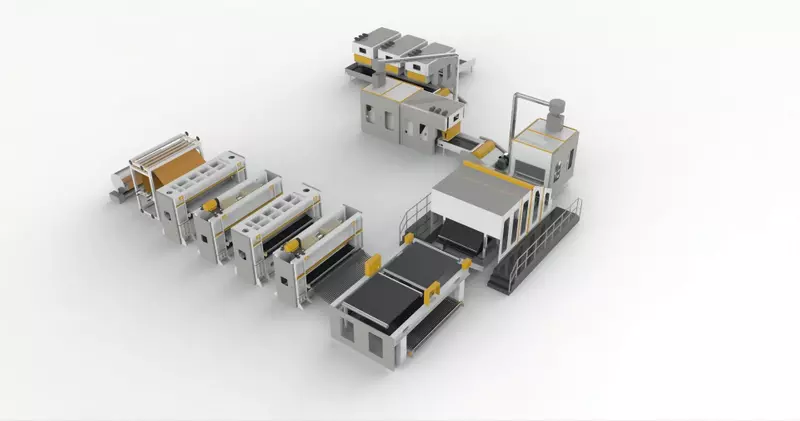
AoLong PET Teppich Nadel Stanzen Nonwoven Stoff nicht gewebt Produktionslinie
-

AL-Nonwoven High Capacity Ausstellung Teppich Nadelvlies Linie
-
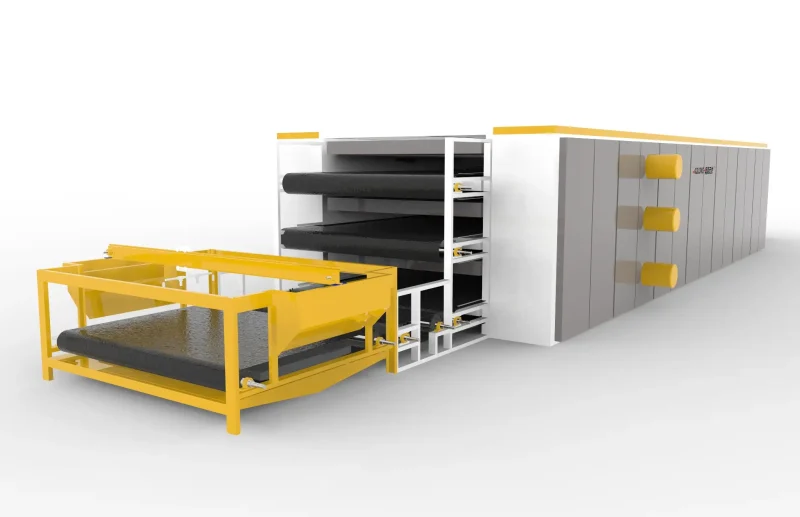
AL-BJB Vliesstoff für die Küchenreinigung Scheuerschwamm-Stoffherstellungsmaschine
-

AL-ZCFZ 2400mm West Filz Nadel Stanzen Nonwoven Making Machine
PET-Vliesstoff-Herstellungsmaschine
Build the Right PET Nonwoven Production Line for Your Product
From fiber preparation and web forming to needle punching or thermal bonding, Aolong configures PET nonwoven making machines around your target fabric, capacity and application. Get a complete production solution for technical and industrial nonwoven manufacturing.
Ergebnisse 1 – 8 von 113 werden angezeigt
-

ALQR-Teppich Veloursvlies Produktionslinie
-

ALSAB–1000 mm Produktionslinie für Schallschutzplatten aus Vliesstoff
-

ALGYB-1000mm Akustikplatte Vliesstoff Produktionslinie
-

ALGYB – Produktionslinie für PET-Faser-Akustikplatten (2000 mm) aus Vliesstoff
-

ALGYB-Akustikplatten-Vliesstoff-Produktionslinie
-

ALLQ–4500 mm Produktionslinie für nadelgestanzte Asphalt-Geotextil-Vliesstoffe
-

ALLQ–6500 mm Produktionslinie für nadelgestanzte Asphalt-Geotextilien
-

ALTG-PET Asphalt Geotextil High Way Needle Punching Nonwoven Fabric Produktionslinie
PET nonwoven making machines are used to process polyester fibers into nonwoven fabrics with controlled GSM, thickness, width, density and mechanical properties. Aolong provides PET nonwoven machinery for different technical textile applications, including geotextiles, carpets, automotive interior materials, PU leather substrates, scouring pads, wadding and felt.
The required production line depends on the finished product, raw material, production capacity and fabric specifications. Some projects require a complete production line covering fiber preparation, carding, web forming and bonding, while existing factories may only need an individual machine to upgrade a specific production stage. Aolong can configure the equipment according to the actual manufacturing requirements of each project.
PET Nonwoven Machine Solutions
PET nonwoven production involves several interconnected processes. Fiber preparation, web formation and bonding technology all affect the structure and performance of the finished fabric. Selecting equipment based only on production speed or machine width can result in an unsuitable configuration, so the production process should first be matched with the target product.
The following table summarizes the main technologies involved in PET nonwoven production and the key parameters that should be considered during equipment selection.
| Kerntechnologie | Hauptfunktion | Key Parameters | Fabric Characteristics | Typische Anwendungsbereiche |
|---|---|---|---|---|
| Fiber Opening & Blending | Opens and mixes PET fibers before web formation | Fiber length, denier, blend ratio, feeding rate | Uniform fiber distribution | PET and recycled PET nonwoven |
| Kardieren | Separates, aligns and forms fibers into a web | Carding speed, web GSM, working width, fiber specification | Web uniformity and fiber orientation | Needle-punched and thermal-bonded fabrics |
| Cross Lapping | Layers the fiber web to achieve the required structure | Lapping ratio, web width, line speed | GSM, thickness and strength distribution | Geotextile, carpet, automotive and industrial felt |
| Nadelstanzen | Mechanically consolidates the fiber web | Needle density, punching frequency, penetration depth, line speed | Strength, density and thickness | Geotextile, carpet, automotive, PU leather substrate and felt |
| Thermische Verklebung | Bonds suitable thermoplastic fibers through controlled heating | Oven temperature, heating zones, line speed, fabric GSM | Loft, thickness and bonding strength | Wadding, padding and scouring pads |
| Finishing & Winding | Processes and packages finished nonwoven fabric | Cutting width, winding diameter, fabric tension | Roll quality and dimensional consistency | Technical and industrial nonwoven rolls |
The appropriate combination of these processes depends on the final fabric requirements. Needle punching is commonly selected for technical nonwoven products requiring mechanical fiber entanglement, while thermal bonding can be used when heat-based consolidation is suitable for the selected fiber and product.
A complete PET nonwoven production line can integrate several processes into a continuous system. For existing factories, individual machines can also be supplied to replace equipment, increase capacity or improve a specific production stage.
PET Nonwoven Production Processes
A typical PET needle-punched nonwoven production line follows a sequence of fiber preparation, web formation and mechanical consolidation.
PET Fiber → Opening & Blending → Carding → Cross Lapping → Needle Punching → Finishing → Winding
Fiber opening and blending prepare the raw material for consistent feeding. Carding separates and arranges the fibers to form a uniform web, while cross-lapping builds the required web structure and distributes the fibers according to the target fabric weight and thickness.
The needle punching stage then consolidates the web through mechanical fiber entanglement. Needle density, punching frequency, penetration depth and production speed can affect the final fabric structure and mechanical properties.
For thermally bonded products, the process can be configured differently:
PET Fiber → Opening & Blending → Carding → Web Forming → Thermal Bonding Oven → Cooling → Finishing → Winding
The actual production process should be determined according to the raw material and finished product rather than applying one standard configuration to every PET nonwoven project.
PET Nonwoven Machine Applications
PET nonwoven machinery can be configured for a broad range of technical textile and industrial products. Each application places different requirements on fabric weight, thickness, strength, density, flexibility and surface structure.
Geotextile Production
PET needle-punched nonwoven is widely used in civil engineering applications where filtration, drainage, separation and reinforcement are required. Fabric specifications can vary significantly depending on the project and installation conditions.
Aolong provides dedicated Geotextil-Maschine solutions for manufacturers producing PET geotextiles with different fabric widths, GSM ranges and performance requirements.
Carpet Production
Needle-punched PET nonwoven can be used in carpets, carpet backing and other floor covering materials. The required fiber structure, thickness, density and surface properties depend on the finished carpet design.
Manufacturers can refer to Aolong’s Teppichwebmaschinen for equipment configured for carpet-related nonwoven production.
Automotive Interior Materials
PET nonwoven is used in automotive interiors for applications including lining, insulation, acoustic materials and other interior components. Production requirements can focus on fabric uniformity, thickness, flexibility, weight and mechanical performance.
Aolong’s automotive interior nonwoven machine solutions can be configured according to the required automotive material specifications.
PU Leather Substrates
PET nonwoven can serve as a substrate for PU synthetic leather. The substrate needs to provide suitable uniformity, flexibility, thickness and dimensional stability for subsequent coating and finishing processes.
For this application, Aolong provides PU leather substrate machine solutions for producing needle-punched nonwoven substrates.
Scouring Pad Materials
Scouring pad production requires a suitable fiber structure and bonding method to achieve the required thickness, density, flexibility and surface characteristics. Thermal bonding can be used to consolidate the fiber structure where the selected raw material and product design permit.
Aolong provides a scouring pad production line for manufacturers producing nonwoven materials for cleaning applications.
Wadding and Padding
Thermally bonded nonwoven can be used for wadding and padding applications where thickness, loft, softness and structural stability are important. The bonding process needs to be controlled according to the fiber characteristics and target fabric properties.
Aolong’s thermal bonding oven machine can be configured for thermal-bonded nonwoven production according to the required product specifications.
Waste Felt Production
Suitable waste and recovered fibers can be processed into felt and other nonwoven products. The characteristics of the incoming material and the required finished product determine the appropriate processing configuration.
Aolong provides a waste felt production line for projects using suitable waste or recovered fiber materials.
How to Choose a PET Nonwoven Making Machine
Choosing the right PET nonwoven making machine starts with the finished product. A machine designed for heavy geotextile production may have very different requirements from equipment used for lightweight wadding or carpet materials.
Define the Final Product
Start by identifying the product you intend to manufacture. Common PET nonwoven applications include geotextiles, carpets, automotive interior materials, PU leather substrates, cleaning materials, wadding and felt.
The product determines the required production technology and provides the basis for subsequent equipment selection.
Confirm the Raw Material
Raw material characteristics directly affect fiber processing and finished fabric properties. Important information includes:
- PET fiber type
- Virgin or recycled PET
- Fiber length
- Fiber denier
- Blend ratio
- Raw material feeding characteristics
If recycled or recovered fibers are used, their quality and consistency should also be considered when configuring the production line.
Determine Fabric Specifications
Before selecting the machine, define the target fabric specifications, including:
- Arbeitsbreite
- Gewebe GSM
- Dicke
- Dichte
- Zugfestigkeit
- Surface structure
- Finished roll specifications
These requirements help determine the appropriate processing equipment and operating parameters.
Calculate Production Capacity
Production capacity should be considered together with fabric GSM, working width and production speed. A higher line speed does not necessarily provide better production economics if the required fabric specifications cannot be maintained.
The target output should therefore be established according to the actual finished product and planned production schedule.
Select the Appropriate Technology
Needle punching and thermal bonding provide different methods of consolidating a fiber web. Needle punching mechanically entangles fibers, while thermal bonding uses controlled heat to create bonds within suitable thermoplastic fiber structures.
The choice should be based on the desired fabric properties, raw material and end application rather than machine speed alone.
PET Nonwoven Production Line Configuration
A PET nonwoven production line consists of multiple processing stages that work together to produce a consistent finished fabric.
Faseraufbereitung
Opening and blending equipment prepares the PET fibers for subsequent processing. Proper fiber preparation helps maintain consistent feeding and improves the uniformity of the web.
Kardieren
The carding machine separates and arranges fibers to form a controlled fiber web. Carding performance affects web uniformity, fiber orientation and the consistency of the material entering the following process.
Cross Lapping
Cross-lapping places layers of fiber web according to the required fabric structure. The lapping ratio and web configuration can influence GSM, thickness and strength distribution.
Nadelstanzen
The needle punching process consolidates the web through repeated penetration of barbed needles. Process parameters can be adjusted according to the required fabric density, thickness and mechanical properties.
Thermische Verklebung
For thermally bonded products, the fiber web passes through a controlled heating zone. Temperature, heating time and line speed need to be matched with the fiber characteristics and finished fabric requirements.
Veredelung und Aufwickeln
After consolidation, the fabric can be processed through finishing, cutting, slitting, inspection and winding equipment according to the finished product requirements.
The complete configuration is not identical for every PET nonwoven product. The equipment combination should be designed around the target product, raw material, fabric specifications and production capacity.
Complete Production Line or Individual Machine?
A complete production line is generally considered when establishing a new PET nonwoven manufacturing project or significantly expanding production capacity. The entire process can be designed as an integrated system, from fiber preparation through web formation, consolidation and winding.
Existing manufacturers may have different requirements. An individual machine may be more appropriate when replacing outdated equipment, increasing capacity at one production stage or improving a specific part of an existing line.
Aolong provides both complete production solutions and nonwoven single machine options. This allows customers to select equipment according to their existing production system and investment objectives.
Customized PET Nonwoven Production Solutions
PET nonwoven machinery should be configured around actual production requirements rather than selected from capacity figures alone. A suitable solution needs to consider the relationship between raw material, production process, fabric specifications and factory conditions.
Aolong can configure PET nonwoven production equipment according to requirements including product type, raw material, working width, GSM, thickness and target capacity. Factory space, automation requirements and existing equipment can also be considered during the production line design process.
For a new factory, the project can start with the target product and production capacity before determining the complete process and equipment configuration. For an existing manufacturer, the focus can instead be placed on the specific section that needs replacement, upgrading or expansion.
This application-based approach helps ensure that the selected equipment is aligned with the actual production objective.
PET Nonwoven Machine Technical Parameters
When comparing PET nonwoven machines, buyers should evaluate parameters in relation to the finished fabric rather than looking at one specification independently.
| Parameter | Was zu beachten ist |
|---|---|
| Rohmaterial | PET, recycled PET or suitable fiber blends |
| Spezifikation der Fasern | Fiber length, denier and material characteristics |
| Arbeitsbreite | Required finished fabric width |
| Gewebe GSM | Target weight range |
| Fabric Thickness | Required finished thickness |
| Produktionskapazität | Target output based on actual fabric specifications |
| Liniengeschwindigkeit | Required operating speed for the target product |
| Dichte der Nadeln | Important for needle-punched fabric consolidation |
| Stanzfrequenz | Affects fiber entanglement and fabric structure |
| Ofentemperatur | Important for thermal bonding processes |
| Automatisierungsgrad | Manual, semi-automatic or automated configuration |
| Fertigstellung | Cutting, slitting, winding and other requirements |
Actual machine parameters and production capacity should be confirmed according to the specific product and line configuration. Different fabric specifications may require different equipment combinations and operating conditions.
Why Choose Aolong for PET Nonwoven Machinery?
PET nonwoven production involves multiple interconnected processes, so equipment selection should consider the complete manufacturing process rather than individual machine specifications alone.
Aolong focuses on nonwoven machinery and production solutions for different technical textile applications. The equipment range covers complete production lines and individual machines for different PET nonwoven processes and products.
Technical support can include production line configuration, equipment manufacturing, installation, commissioning and operator training. This allows the equipment solution to be developed around the customer’s product specifications, production capacity and factory conditions.
Für Hersteller, die verschiedene Produkte vergleichen Vliesstoffanlagen, the evaluation should include production technology, equipment compatibility, finished product requirements, capacity and technical support.
PET Nonwoven Machine Buying Checklist
Before requesting a quotation, prepare the following information:
| Anforderung | Information to Prepare |
|---|---|
| Endprodukt | Geotextile, carpet, automotive material, felt, wadding, etc. |
| Rohmaterial | PET fiber, recycled PET or other suitable fibers |
| Spezifikation der Fasern | Fiber length, denier and blend information |
| Stoffbreite | Required working and finished width |
| GSM | Target fabric weight |
| Dicke | Required finished thickness |
| Produktionskapazität | Target output or annual production |
| Produktionsprozess | Needle punching or thermal bonding |
| Fabrikfläche | Available production area |
| Automatisierung | Erforderlicher Automatisierungsgrad |
| Existing Equipment | Equipment to be retained, upgraded or replaced |
Providing these details allows the equipment configuration to be evaluated according to the actual production requirements and helps create a more accurate technical proposal.
FAQs About PET Nonwoven Making Machines
What is a PET nonwoven making machine?
A PET nonwoven making machine is equipment used to process polyester fibers into nonwoven fabrics through fiber preparation, web formation and bonding processes. The final configuration depends on the required fabric properties and application.
What products can be made with PET nonwoven machinery?
PET nonwoven machinery can be configured to produce materials for geotextiles, carpets, automotive interiors, PU leather substrates, scouring pads, wadding, padding and felt. Different applications require different production configurations.
What is the difference between needle punching and thermal bonding?
Needle punching consolidates fibers through mechanical entanglement using barbed needles. Thermal bonding uses controlled heat to bond suitable thermoplastic fibers. The appropriate technology depends on the raw material and finished product requirements.
Can PET nonwoven machines process recycled PET fiber?
Suitable recycled PET fibers can be processed through PET nonwoven production systems. However, the required equipment configuration and operating conditions depend on the characteristics of the recycled fiber and the specifications of the finished fabric.
How do I choose the right PET nonwoven production line?
Start with the final product, raw material, fabric width, GSM, thickness and target production capacity. These factors determine the appropriate production process and help define the required equipment configuration.
Can I buy an individual PET nonwoven machine?
Yes. Individual machines can be used for existing production lines that require equipment replacement, capacity expansion or process upgrades. The machine should be selected according to the specific production stage and compatibility with the existing system.
Can PET nonwoven production lines be customized?
Yes. Production lines can be configured according to the target product, raw material, fabric specifications, production capacity, automation requirements and factory conditions.