


Related products
-

AL–SMS 1600mm PP Spunbond Nonwoven Fabric Making Machine
-

ALS–2400mm Single Beam bags used PP Spunbond Nonwoven Fabric Making Machine
-

ALSS—3200mm SS PP Spun-bond Nonwoven Health Non Woven Fabric Making Production Machine
-

ALFN— S PP Spubond Nonwoven Fabric Maikng Machine
-
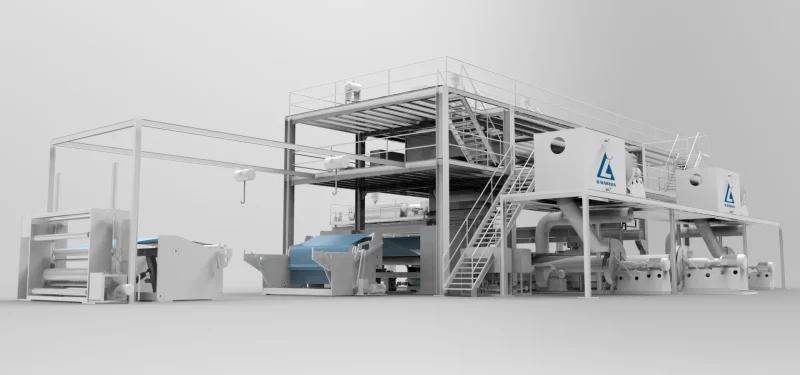
ALSMS–2400mm PP Spun-bond Nonwoven Medical Non Woven Fabric Making Production Line
S‑Type PP Spunbond Nonwoven Machines
Aolong Nonwoven, a leading nonwoven fabric making machine supplier, provides the S Type PP Spunbond Nonwoven Machine, engineered for the production of economical, single-layer spunbond nonwoven fabrics. This machine is perfect for industries that require a simple yet effective solution for lightweight materials used in hygiene products, protective wear, and general-purpose applications. Its advanced technology guarantees efficiency and consistent fabric quality with every production run.
Showing 1–8 of 14 results
-

AOLONG Single S‑Type PP Spunbond Nonwoven Fabric Production Line
-

ALS–1600mm Single Beam Bags Used PP Spunbond Nonwoven Fabric Making Machine
-

ALS–2400mm PP Spunbond Nonwoven Fabric Making Production Line
-

AL–1600mm pp Spunbond Nonwoven Making Machine
-

ALFN–3200mm pp Spunbond Nonwoven Making Machine
-

ALFN–4200mm pp Spunbond Nonwoven Making Machine
-
ALS–2400mm Single Beam bags used PP Spunbond Nonwoven Fabric Making Machine
-

AL–1600mm S Beam PP Spunbons Nonwoven Fabric Non-woven Machine Making Product Line
S-Type PP Spunbond Nonwoven Machine
Single-Beam PP Spunbond Production for Focused, Cost-Efficient Fabric Manufacturing
S-Type PP spunbond nonwoven machines use a single spinning beam to produce continuous polypropylene filaments and form them into a bonded nonwoven fabric. This single-layer configuration creates a straightforward production route from PP resin feeding and extrusion to filament formation, web formation, thermal bonding and winding.
For manufacturers producing single-layer PP spunbond fabrics, an S-Type line can provide a practical balance between production efficiency, process simplicity and equipment investment. Compared with multi-beam or composite configurations, it avoids additional layer-forming systems when the finished fabric does not require them.
If you are comparing different types of PP spunbond nonwoven fabric machines, the key question is not simply how many layers a machine can produce, but whether the machine structure matches the fabric you actually need to manufacture.
What Is an S-Type PP Spunbond Machine?
The defining feature of an S-Type machine is its single spinning beam.
During production, PP resin is melted and filtered before entering the spinning system. The polymer is converted into continuous filaments, cooled and drawn, then distributed across the working width to form a uniform web. The web is thermally bonded and wound into finished rolls.
This single-beam structure is suitable when the target fabric can achieve the required properties through one spunbond layer. It eliminates the need for additional spunbond or meltblown layers while maintaining a continuous production process.
An S-Type line is therefore not simply a smaller version of an SS or SSS machine. It represents a different production approach for manufacturers whose products do not require a multi-layer fabric structure.
Why Choose a Single-Beam Configuration?
The main advantage of an S-Type production line comes from matching machine complexity to product requirements.
Single-Layer Production
An S-Type line produces one spunbond layer, making it suitable for products where a single-layer PP fabric provides the required strength, coverage and handling characteristics.
The production structure remains focused on filament formation, uniform web distribution and thermal bonding rather than introducing additional fabric layers.
A More Straightforward Production Process
A single-beam configuration has fewer spinning and web-forming stages to coordinate than multi-beam spunbond lines. This can simplify production management, routine operation and maintenance.
For manufacturers producing dedicated single-layer products, a simpler production structure can also make process control more straightforward.
Cost-Efficient Equipment Configuration
When additional layers are not required by the final product, a more complex production line may add equipment and operating requirements without delivering proportional value.
An S-Type machine provides a focused configuration for projects where single-layer fabric performance is sufficient.
Suitable for Lightweight PP Spunbond Fabrics
S-Type machines are particularly suitable for lightweight and general-purpose PP spunbond fabrics where consistent GSM, web uniformity and stable roll production are important.
The actual fabric range and production output depend on the selected machine configuration, working width, raw material and operating conditions.
What Can an S-Type PP Spunbond Machine Produce?
An S-Type line is designed for single-layer PP spunbond nonwoven fabric. The fabric specification can vary according to the machine configuration and production requirements.
Typical product requirements may include lightweight fabrics for packaging, agricultural materials, household products and other general-purpose nonwoven applications.
The important consideration is whether the finished product can achieve its required performance through a single spunbond layer.
For products that require additional spunbond layers, a different configuration may be more appropriate. Manufacturers can compare SS nonwoven machines and SSS nonwoven machines when greater flexibility in multi-layer spunbond production is required.
S-Type vs. SS, SSS, SMS and SSMMS
Choosing the right production line starts with understanding the fabric structure.
| Machine Type | Fabric Structure | Main Production Characteristic | When to Consider |
|---|---|---|---|
| S | Single spunbond layer | Straightforward single-layer production | When one spunbond layer meets the product requirements |
| SS | Two spunbond layers | Greater control over fabric structure | When a two-layer spunbond structure is required |
| SSS | Three spunbond layers | More complex multi-layer spunbond production | When additional layer control is needed |
| SMS | Spunbond + Meltblown + Spunbond | Combines strength with functional meltblown layer | When filtration or barrier properties are required |
| SSMMS | Spunbond + Meltblown + Meltblown + Spunbond + Spunbond | Five-layer composite structure | When more complex functional fabric construction is required |
An S-Type machine should therefore be selected because its single-layer structure fits the target product, not simply because it has fewer production stages.
If the finished fabric requires multiple spunbond layers, SS nonwoven machines or SSS nonwoven machines may provide a more suitable configuration.
For composite fabrics that require meltblown layers, manufacturers should consider an SMS nonwoven machine or SSMMS nonwoven machine.
S-Type PP Spunbond Production Process
An S-Type PP spunbond production line integrates material feeding, extrusion, filament formation, web formation, thermal bonding and winding into a continuous process.
PP Resin Feeding
↓
Extrusion & Melting
↓
Melt Filtration & Metering
↓
Filament Spinning
↓
Cooling & Drawing
↓
Web Formation
↓
Thermal Bonding & Calendering
↓
Winding & Slitting
PP Resin Feeding
PP resin is continuously supplied to the extrusion system through a controlled material feeding system. Stable feeding helps maintain consistent material flow throughout continuous production.
Extrusion & Melting
The screw extruder melts and conveys PP resin under controlled temperature and pressure. The molten polymer then passes through the filtration and metering system before entering the spinning section.
Filament Spinning
The molten polymer is extruded through the spinning system to form continuous filaments. Stable spinning conditions are important for maintaining consistent filament formation across the working width.
Cooling & Drawing
The newly formed filaments are cooled and drawn before entering the web-forming section. Controlled cooling and drawing influence filament distribution and the resulting fabric structure.
Web Formation
The drawn filaments are distributed across the working width to create a uniform web. The web-forming system plays an important role in maintaining consistent fabric density and GSM.
Thermal Bonding & Calendering
The web passes through the thermal bonding section, where controlled temperature and pressure consolidate the fibers into a stable nonwoven structure. Calendering conditions influence fabric strength, surface appearance and uniformity.
Winding & Slitting
The finished fabric is wound into rolls and can be slit according to downstream processing requirements.
S-Type Machine Configuration
An S-Type production line integrates the major stages required for single-layer PP spunbond manufacturing into one continuous system.
The configuration typically includes material feeding, extrusion, melt filtration, metering, spinning, cooling, drawing, web formation, thermal bonding and winding.
The final machine configuration should be determined according to the target fabric rather than selected only by working width or rated speed.
Important project parameters include:
- Fabric width
- Target GSM
- Required production output
- PP raw material
- Final application
- Factory voltage
- Available workshop space
- Production schedule
- Required automation level
This approach allows the production line to be matched with the actual manufacturing objective instead of using an oversized or unnecessarily complex configuration.
S-Type Machine Specifications
Working width and fabric GSM are two of the most important factors when selecting an S-Type production line.
A wider machine can increase production potential, but actual output also depends on GSM, production speed, operating efficiency, raw material and process conditions.
For this reason, production capacity should be evaluated against the intended fabric specification rather than relying only on a machine’s maximum rated speed.
Detailed technical specifications, dimensions, power requirements and configuration options should be confirmed for the selected model before quotation.
Applications of S-Type PP Spunbond Fabric
The application range of an S-Type line depends on the properties required from the finished fabric.
Packaging
Single-layer PP spunbond fabric can be used for reusable bags, shopping bags and other packaging products where the required strength and appearance can be achieved within the target GSM range.
Agriculture
Agricultural nonwoven products can require a combination of lightweight construction, fabric coverage and durability. An S-Type line can be considered when the required fabric structure does not call for multiple layers.
Household Products
Single-layer spunbond fabric is suitable for various household and general-purpose nonwoven products where consistent fabric quality and efficient production are important.
Disposable Products
For disposable products that do not require the filtration or barrier structure of SMS or SSMMS fabric, a single-layer spunbond production line can provide a direct manufacturing solution.
The final application should always be evaluated together with the required GSM, fabric strength, softness, air permeability and other product specifications.
When Is an S-Type Machine the Right Choice?
An S-Type PP spunbond production line is a suitable choice when the target product can be produced with a single spunbond layer and the project prioritizes a straightforward process and cost-efficient production.
It can be particularly relevant for manufacturers that:
- Need dedicated production for single-layer PP spunbond fabrics
- Are starting a PP spunbond production project
- Want to expand capacity for an existing single-layer product
- Do not require additional spunbond layers
- Do not require an integrated meltblown layer
- Want to avoid unnecessary production complexity
If the target product requires greater layer flexibility, a multi-layer spunbond configuration may be more appropriate. If filtration or barrier performance is part of the product specification, an SMS or SSMMS structure should be evaluated instead.
This is why selecting the right PP spunbond nonwoven fabric machine should begin with the finished fabric specification and production objective.
S-Type Production Line for Your Project
The right S-Type configuration depends on your required fabric and production target.
Before selecting a machine, we recommend confirming:
Target Product: What finished fabric do you plan to manufacture?
Fabric Width: What finished roll width is required?
GSM: What fabric weight range do you need?
Required Output: What daily or annual production target do you have?
Raw Material: What PP resin specification will be used?
Final Application: Where will the finished fabric be used?
Factory Conditions: What voltage, workshop space and utilities are available?
Providing these details allows the production line to be configured around your actual manufacturing requirements.
S-Type PP Spunbond Machine FAQ
What does S mean in a spunbond machine?
S refers to a single spunbond layer or single-beam production configuration. The machine forms one continuous spunbond layer before thermal bonding.
What are the advantages of an S-Type PP spunbond machine?
The main advantages are its straightforward production structure, single-layer configuration and suitability for products that do not require additional spunbond or meltblown layers.
What is the difference between S and SS spunbond machines?
An S-Type machine produces a single spunbond layer, while an SS machine combines two spunbond layers. The appropriate choice depends on the required fabric structure and final product properties.
Is an S-Type machine suitable for lightweight PP spunbond fabric?
Yes. S-Type machines can be configured for lightweight PP spunbond fabric, provided the target GSM, fabric width and required production output fall within the selected machine’s operating range.
Can an S-Type machine produce different GSM fabrics?
The available GSM range depends on the machine configuration and operating conditions. The target GSM range should be confirmed when selecting the production line.
Should I choose S, SS or SSS?
If one spunbond layer can meet the required product properties, an S-Type machine may provide a more straightforward solution. If the product requires multiple spunbond layers, SS or SSS configurations should be evaluated.
When should I choose SMS or SSMMS instead?
SMS and SSMMS machines should be considered when the finished fabric requires meltblown layers for additional functional properties, including filtration or barrier performance.
Find the Right S-Type PP Spunbond Machine
An S-Type machine is most effective when its simple single-beam structure matches the requirements of the finished fabric. By defining the target GSM, working width, production output and final application first, manufacturers can select a configuration that provides the required production capability without unnecessary process complexity.
For a broader comparison of machine structures, visit the PP spunbond nonwoven machine category. For a specific S-Type production requirement, contact AL Nonwoven with your fabric and production specifications for a project-based configuration.